Stud walls, ceilings, dot and dab, insulated board. We hang it and we skim it, and it comes out flat. Exeter and Devon, free quotes by WhatsApp.
Boarding and skimming are one job. Split them between two firms and you can end up with a wall that's never quite flat.
A skim is only as good as the boards underneath it. Screws in the wrong places, joints that don't land on anything, sheets hung out of line, and the plasterer is fighting the wall before the first coat goes on. Then when it cracks a year later the boarder blames the skimmer and the skimmer blames the boarder. We do both, so that argument never gets started.
Most modern walls and ceilings are dry lined. Twelve and a half mil board on studs or dabbed straight to the masonry, joints taped, then a skim over the top and it's ready for paint. New builds, extensions, loft and garage conversions, or one room where the old wall is past saving. On a cold solid wall we can hang insulated board instead and take the chill off the room while we're at it.
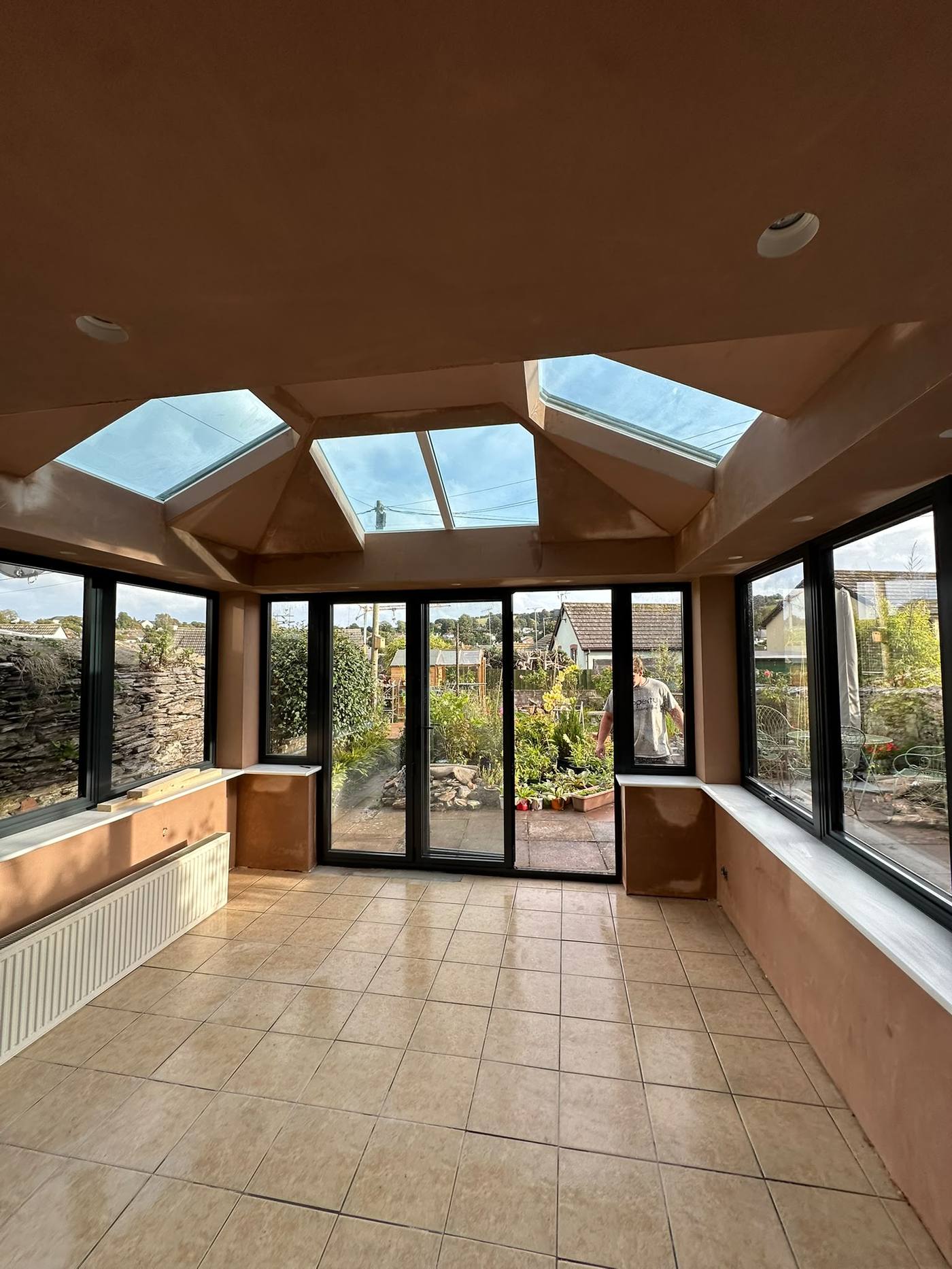
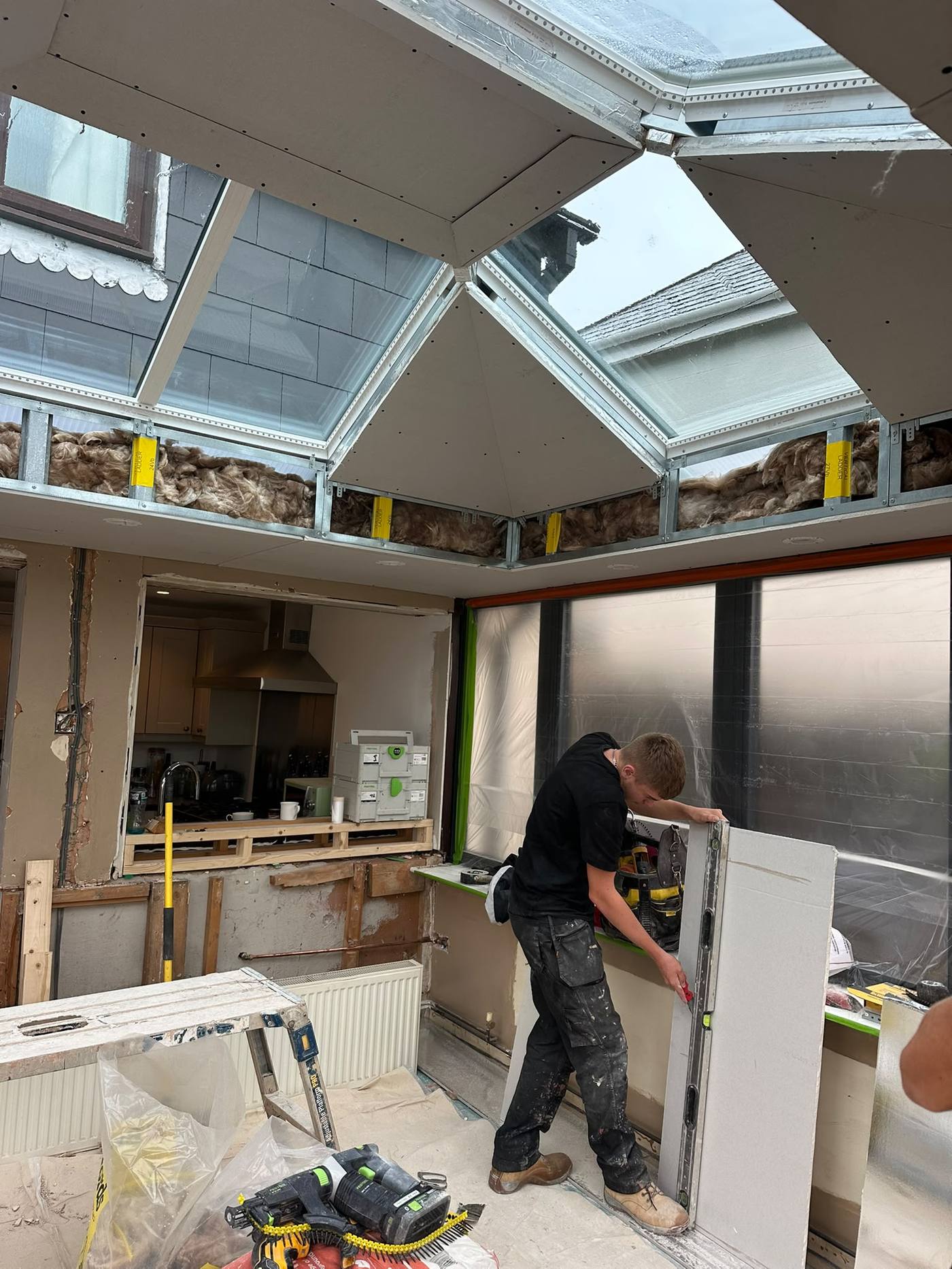
Boarded on one side of the slider, finished on the other.

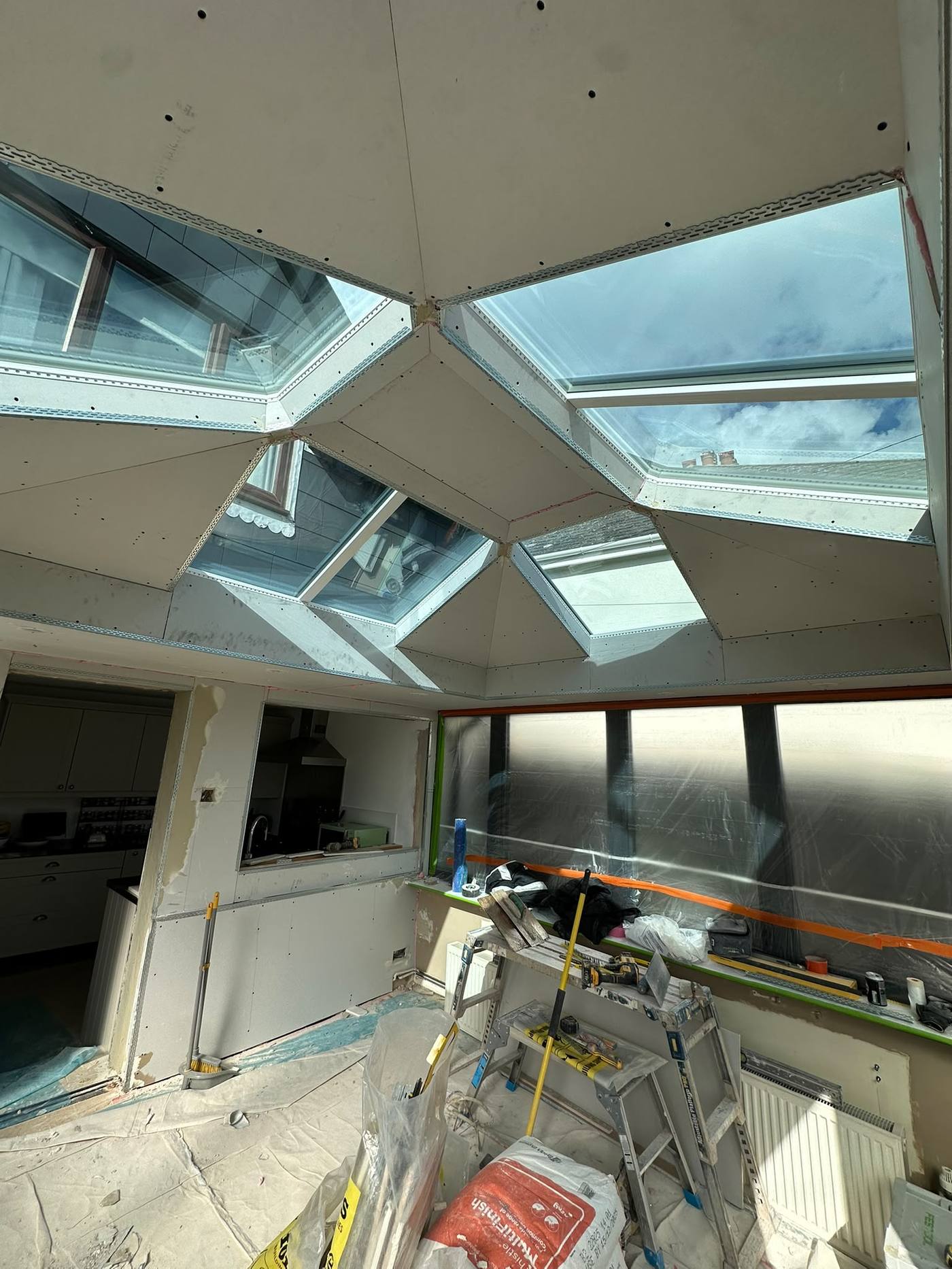
A good example of why the boarding matters. Every panel on a different angle, skylights staying glazed in between, so there's a lot of edges meeting each other up there. All of it has to be beaded and skimmed dead straight, because the light coming through the glass shows up any dip in the ceiling. There's nowhere to hide on a job like this. Framed, insulated, boarded, skimmed. The room went from too hot to use half the year to a normal room with a lot of glass in the roof.
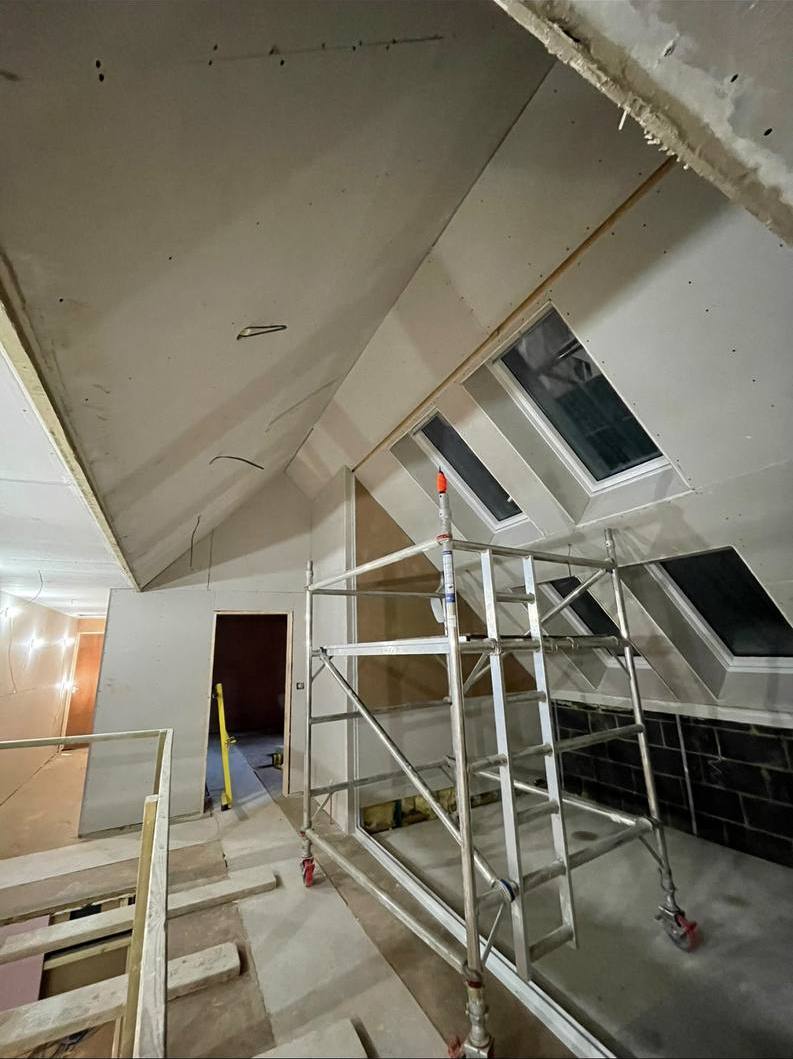
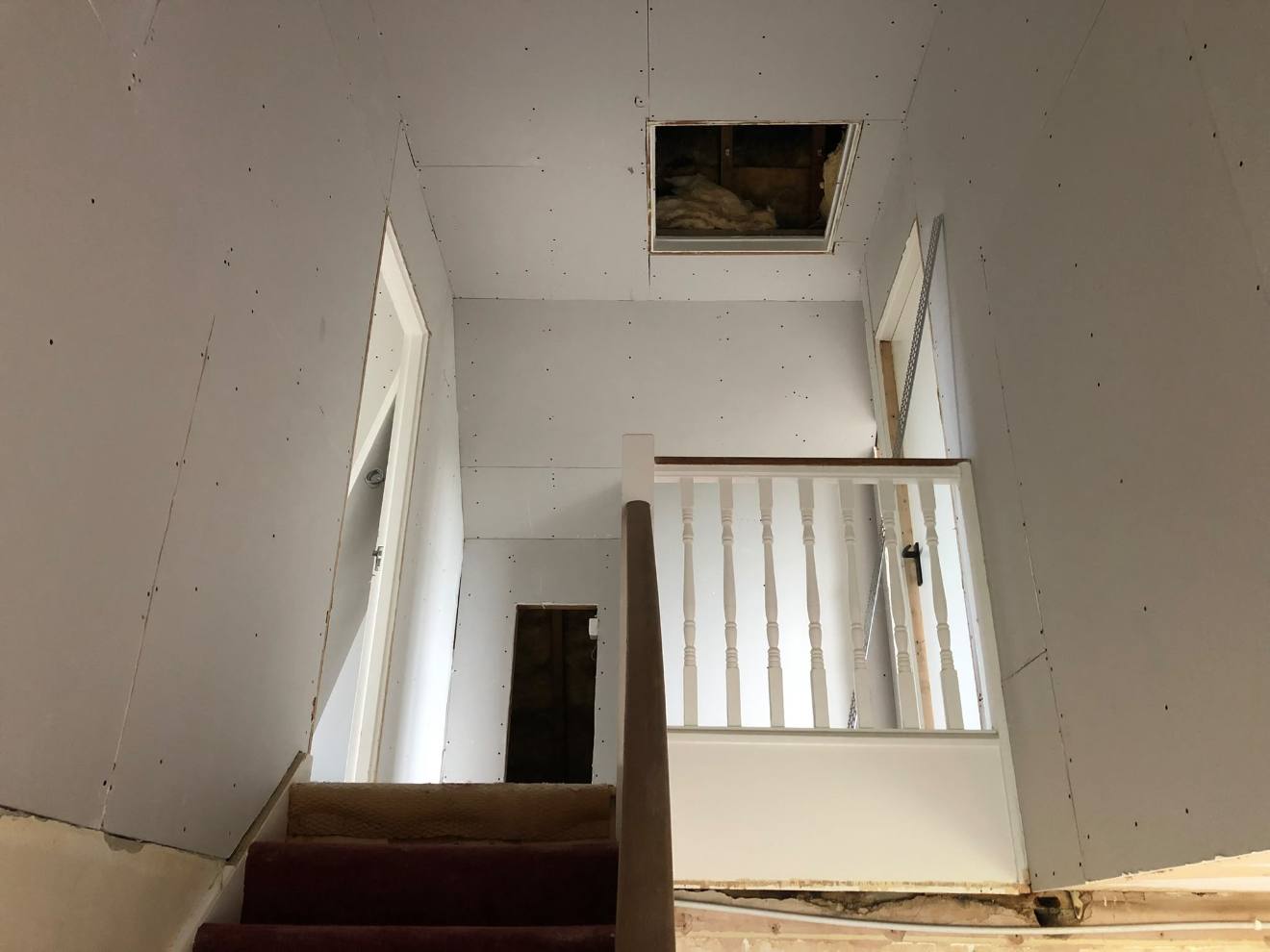
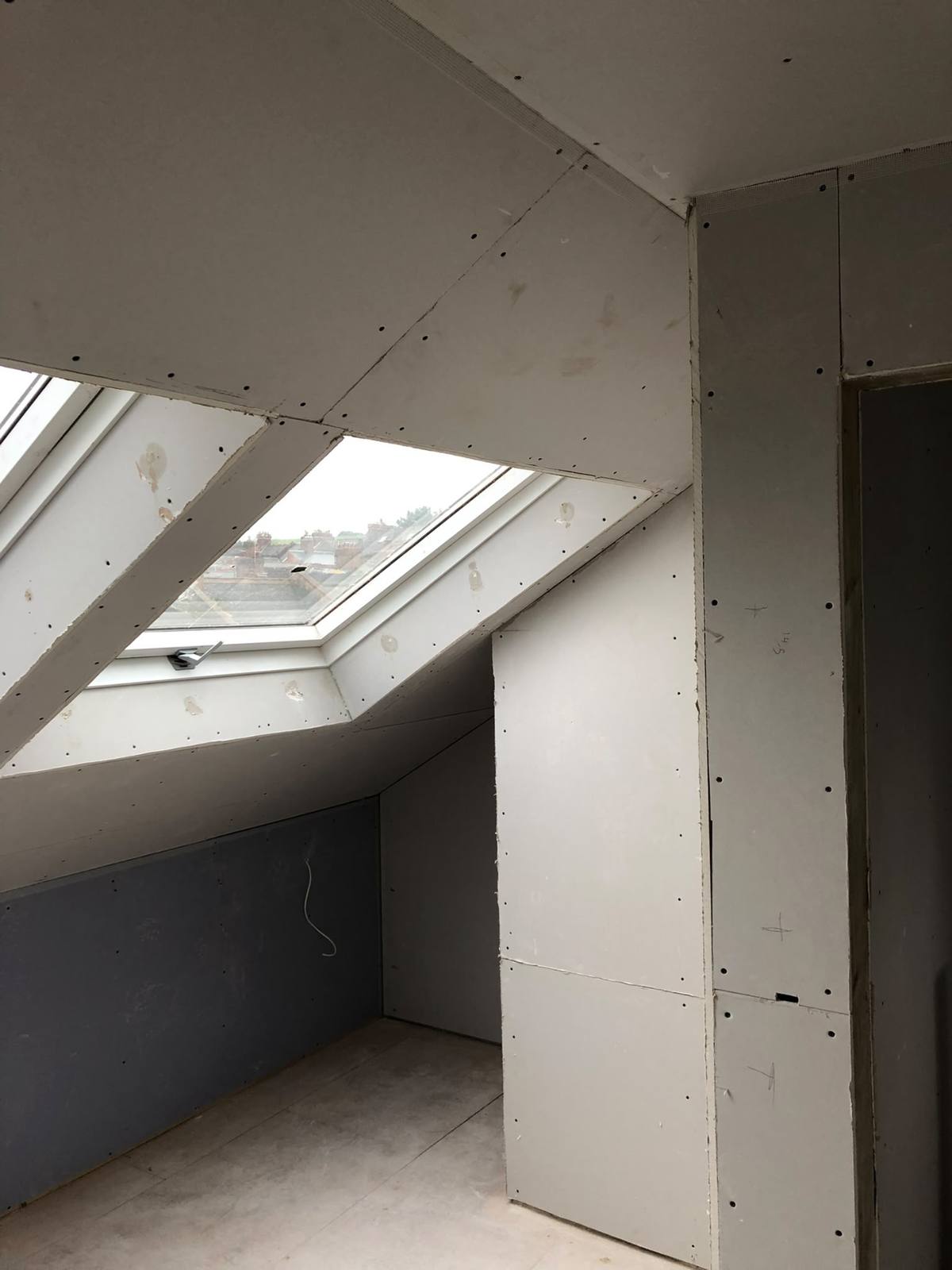
Loft conversions mostly. Sloped ceilings, skylight reveals and stairwells, the awkward stuff.
From new stud walls to conservatory roofs.
New partition walls framed, boarded and skimmed. Splitting a room, closing a landing off, building an en-suite.
New ceilings and overboarded ones, including artex boarded over rather than scraped off, then skimmed flat.
Boards bonded straight to brick or block. The quick route to a flat wall over rough masonry.
Thermal board on cold solid walls. Takes the chill off and cuts condensation, boarded and skimmed in one go.
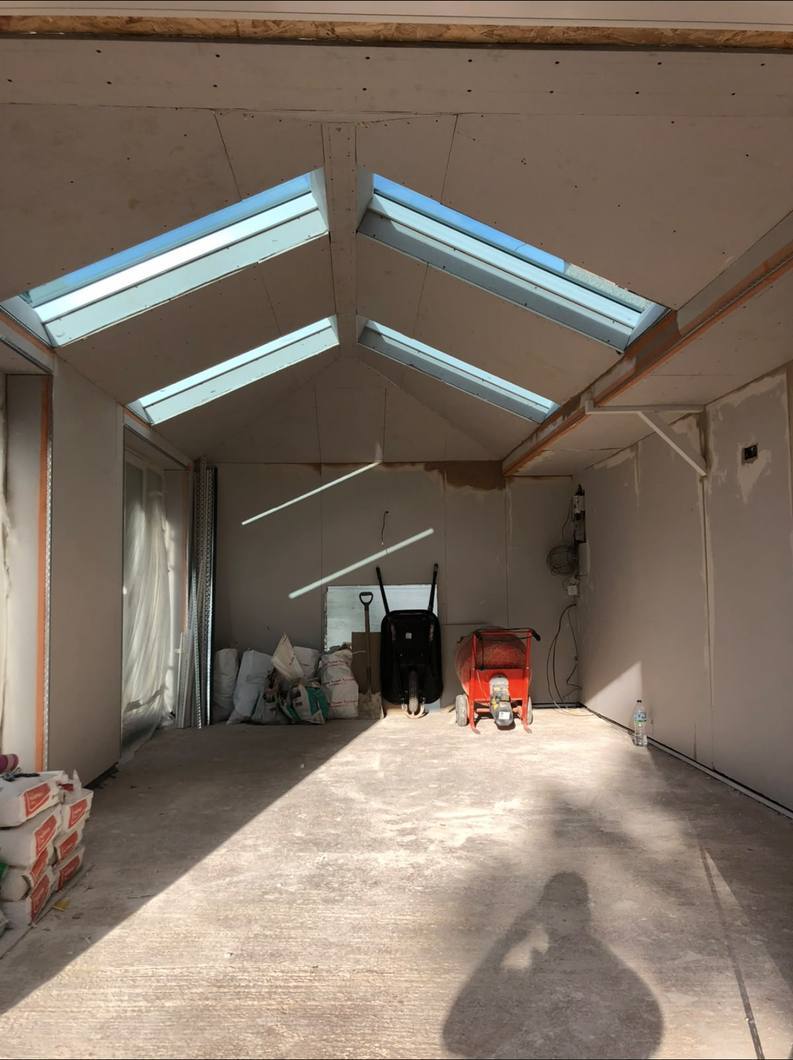
Solid conservatory roof conversions boarded and skimmed. Angles, skylights and all.
Sloped ceilings, knee walls and awkward corners boarded properly so the skim goes on flat and stays flat.
Three ways to get a board on a wall, and people get sold the wrong one all the time.
Dot and dab is board stuck straight to the masonry with dabs of adhesive. Quick, and right for most sound brick and block walls. Two things worth knowing though. It needs a dry wall behind it. Dab over damp and you've sealed the problem in, and it will come back through eventually. And because the board sits on dabs with voids in between, heavy things like TVs and radiators need fixings that go through into the wall behind, not just into the board. Tell us what's going where before we board and we can put solid backing in the right places.
Battens are timber fixed to the wall first, with the board screwed to them. More work than dab. But you get a gap behind for cables, and a screwed fixing you can trust on walls too rough or too iffy for adhesive.
Stud is a new frame altogether, timber or metal, for building a wall where there wasn't one. Splitting a bedroom, boxing in a stairwell, framing out an en-suite.
Which one your job needs depends on the wall you've got, not on which is cheapest to sell you. Send photos over and we'll tell you which we'd use and why.
Two routes with a tired ceiling. Overboard it, new boards screwed straight through the old ceiling into the joists, then skimmed. No demolition, no skip full of lath and plaster, done in a fraction of the time. Or pull it down and start again, which is messier and dearer, but sometimes the only right answer if the old ceiling has sagged badly or the joists need looking at. We do both, and we'll tell you which yours needs when we see it. There's more on this on our ceiling repairs page.
We cover all aspects of plastering and rendering, right across Devon.
Priced by the job, and mostly by these.
Overhead work is slower. A ceiling costs more than the same area of wall, and a conservatory roof full of angles costs more again.
Overboarding an old ceiling is one price. Pulling it down, clearing it and starting fresh is another. We'll tell you which yours needs.
Standard board, moisture board and insulated board are all different money. The right one depends on the room, not the price list.
Boarding a stripped-out room is quick. Working around a kitchen that's staying put takes longer and a lot more sheeting up.
A square bedroom is straightforward. Stairwells, sloped lofts and conservatory roofs are not.
Board and skim done together, so you're not paying two firms' travel and two firms' margins.
Send photos on WhatsApp with a rough idea of size and we'll price it properly. No call-out charge to come and measure up.
Send a quick WhatsApp with a photo and we'll get you a free quote. No call-out charge, no hard sell.